— Feria IV Cinerum — Statio ad S. Sabinam —
Basilica of Santa Sabina, Rome
Embarking on a journey through the heart of Rome, we find ourselves at Santa Sabina, a hidden gem steeped in history and religious significance. At Crux Stationalis, we will delve into the rich tapestry of this Roman Station Church, tracing its roots to the early centuries of Christianity and uncovering the stories that lie within its ancient walls: did you know the first Crucifixion scene in Christian art is found in this Basilica (in the most obscure place)?

Santa Sabina: An Oasis of Serenity
Nestled atop the Aventine Hill, Santa Sabina stands as a testament to time, providing a tranquil escape from the bustling city below. As we ascend the hill on Ash Wednesday, leaving behind the noise of the Lungotevere, we are greeted by the Basilica’s timeless beauty. Surrounded by Roman umbrella pine trees, it is believed to be near the house of Saint Sabina, a Roman matron converted to Christianity in 126 AD.
Ancient Origins and Architectural Marvels
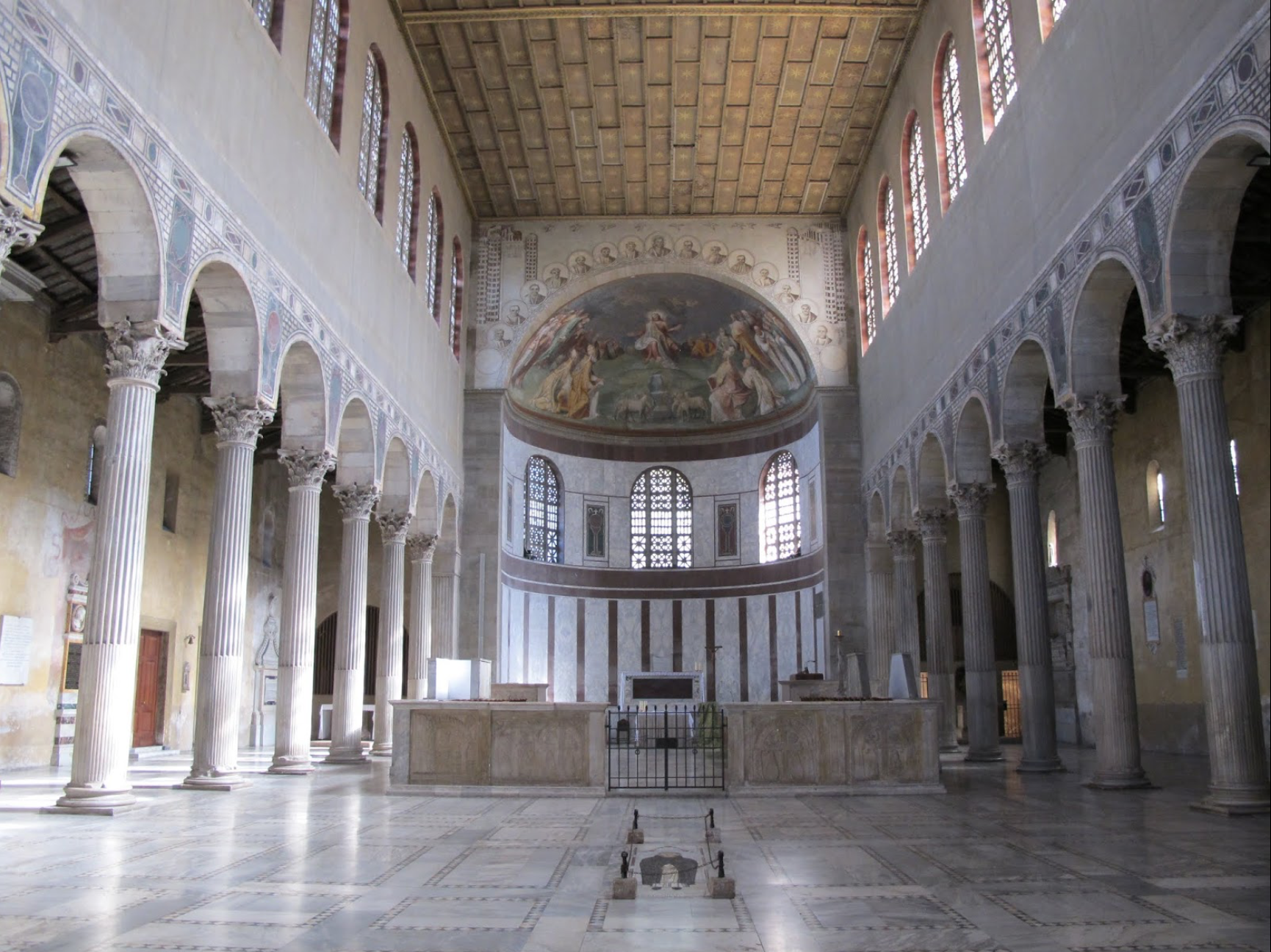
Santa Sabina is the oldest extant Roman Basilica, maintaining the integrity of its collinated rectangular plan and architectural style. Built near the Temple of Juno, the Basilica boasts 24 proconnesian marble columns with perfectly matched Corinthian capitals and bases. The Portico, forming one of the walls of the cloister, holds the enchanting story of Saint Dominic planting the first orange tree in Italy.
A Glimpse into the Past
Entering the Basilica, we step into a space designed during the pontificate of Eugene II in the 9th century. The original 5th-century dedication of the church remains in Latin above the doorway. As we explore the interior, we discover the side Chapel with the Blessed Sacrament, adorned with depictions of the Triumph of Saint Catherine of Siena.
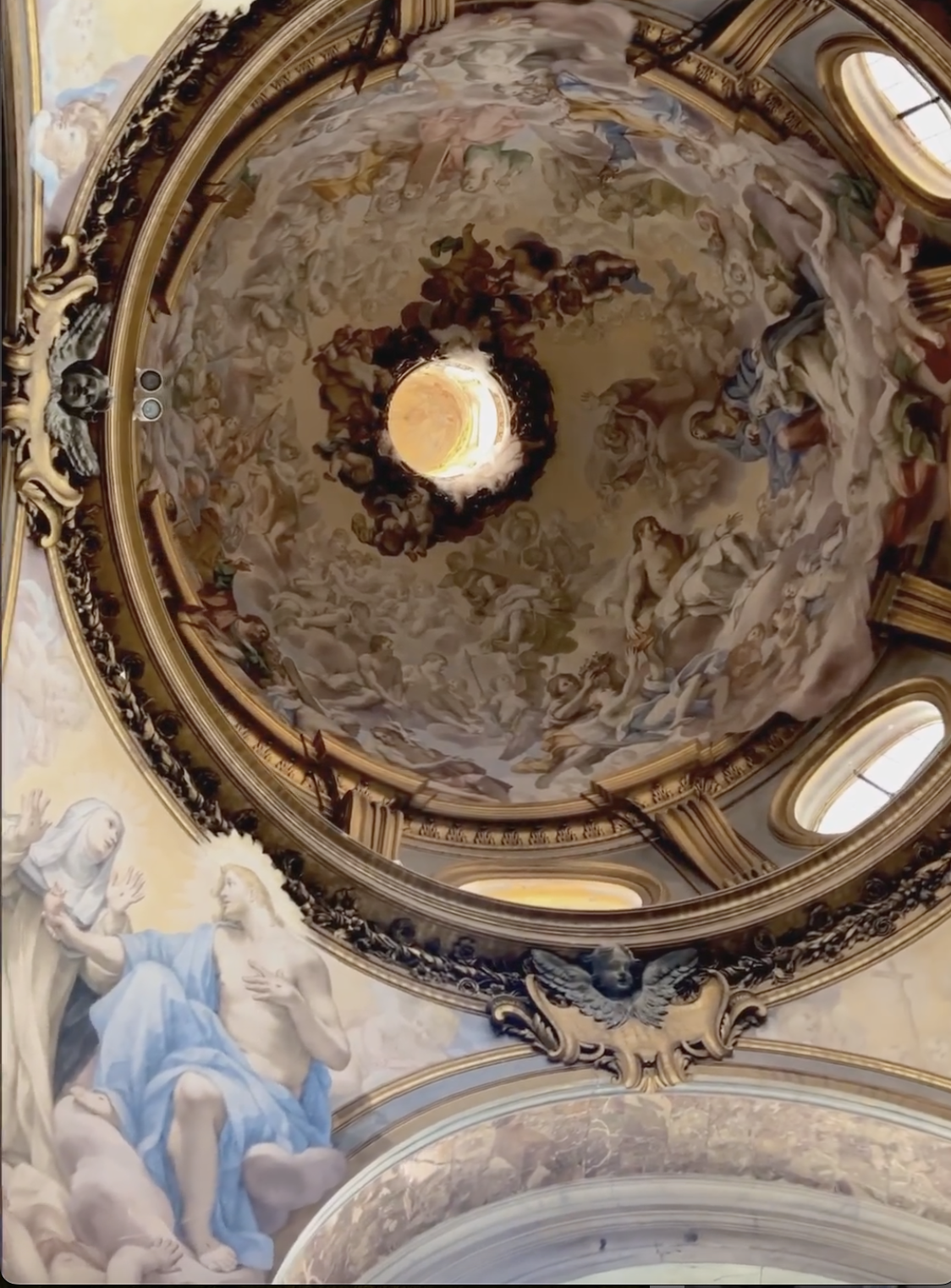
Effects of Light and Opulence
The play of light within Santa Sabina highlights its architectural features, reminiscent of the opulence described in a Spanish Pilgrim’s account of the Church of the Holy Sepulcher in Jerusalem (listen in the video for this beautiful quote). Though the brilliant mosaics that once covered the interior have disappeared, the Basilica’s selenite windows and clerestory create a divine ambiance: the light representing Christ Himself and all His virtues.
Pope Saint Celestine and Roman Orthodoxy
The Basilica, built 80 years after Constantine’s death, was constructed by the priest Peter the Illyrian during the pontificate of Pope Saint Celestine the first. Zealous for Roman Orthodoxy, Celestine fought against Pelagianism and Nestorianism, ensuring the Novations had no stronghold in Rome. His emphasis on rebuking error and restraining liberty of preaching echoes throughout the sacred space.
Station Mass and Holy Triduum
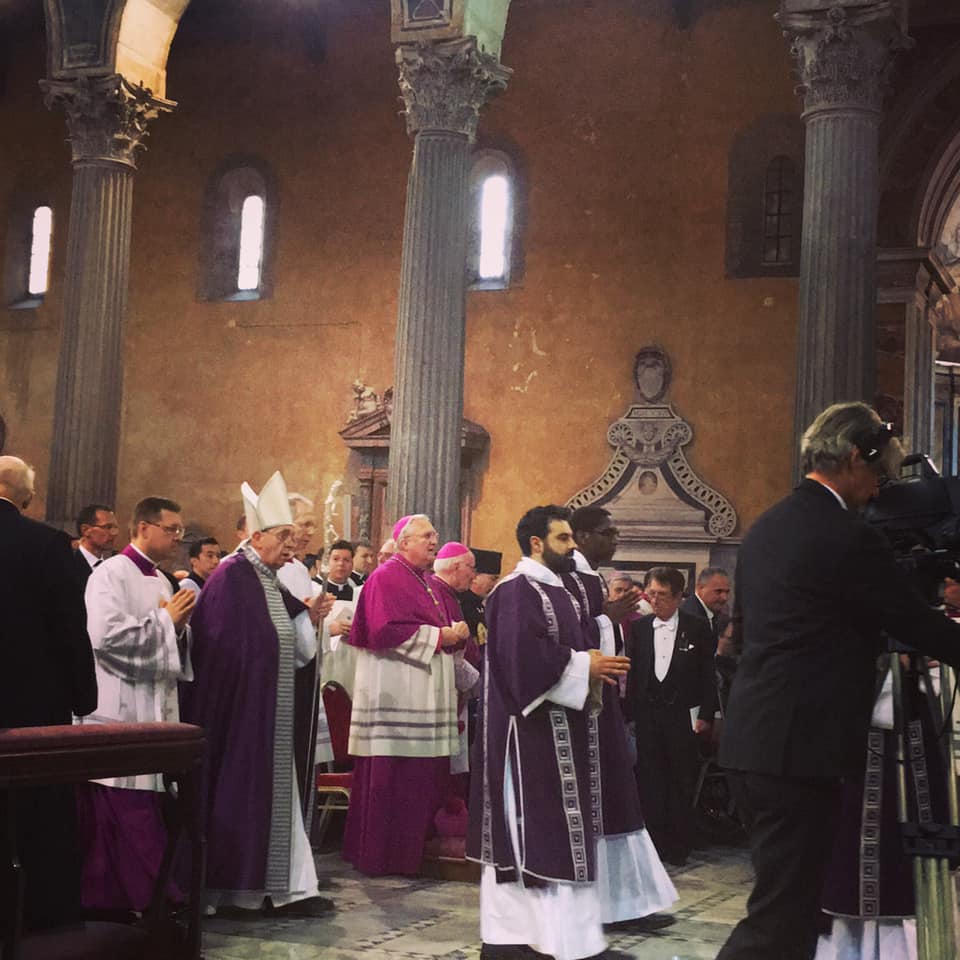
On Ash Wednesday, the Station Mass is typically celebrated by the Holy Father. Opening the Roman Station Church itinerary which carries the Romans through the Lenten journey (visiting a different tomb of a martyr each day of Lent), the Pope joins the faithful again for the Holy Triduum, marking significant moments in the liturgical calendar.
Garden of the Oranges: A Quintessential Roman Experience
No visit to Santa Sabina is complete without exploring the Giardino degli Aranci, the Garden of the Oranges. Surrounded by Roman pine trees, this romantic Roman garden offers a panoramic view of Saint Peter’s Dome and the cityscape, providing a serene retreat for locals and visitors alike.
See the beautiful images of Santa Sabina in our YouTube video
Santa Sabina has layers of history and spirituality woven into its ancient fabric. This Roman Station Church, with its roots reaching back to the 5th century, stands as a testament to the enduring legacy of Christianity in Rome. Join us in uncovering the stories and serenity that make Santa Sabina a cherished destination for those seeking a glimpse into the rich history of ancient Rome.
 Crux Stationalis