Welcome back to Crux Stationalis, the Roman Station Church Network! Today, we find ourselves at the Basilica di Sant’Anastasia, also known as Saint Anastasia. This minor Basilica serves as the Roman Station Church for the Tuesday after the first Sunday in Lent.
Thanks for sharing this post and my video with your family and friends.
— Feria Tertia post Dominicam Primam in Quadragesima — Statio ad S. Anastasiam —
The origins of this basilica date back to the early 4th century when it was one of the original Parish churches of Rome, situated at the ancient centers of power and Pagan cult – The Forum and the Palatine Hill. Over time, it became known as titulus Sanctae Anastasiae, taking its name from one of the saints in the Roman Canon.
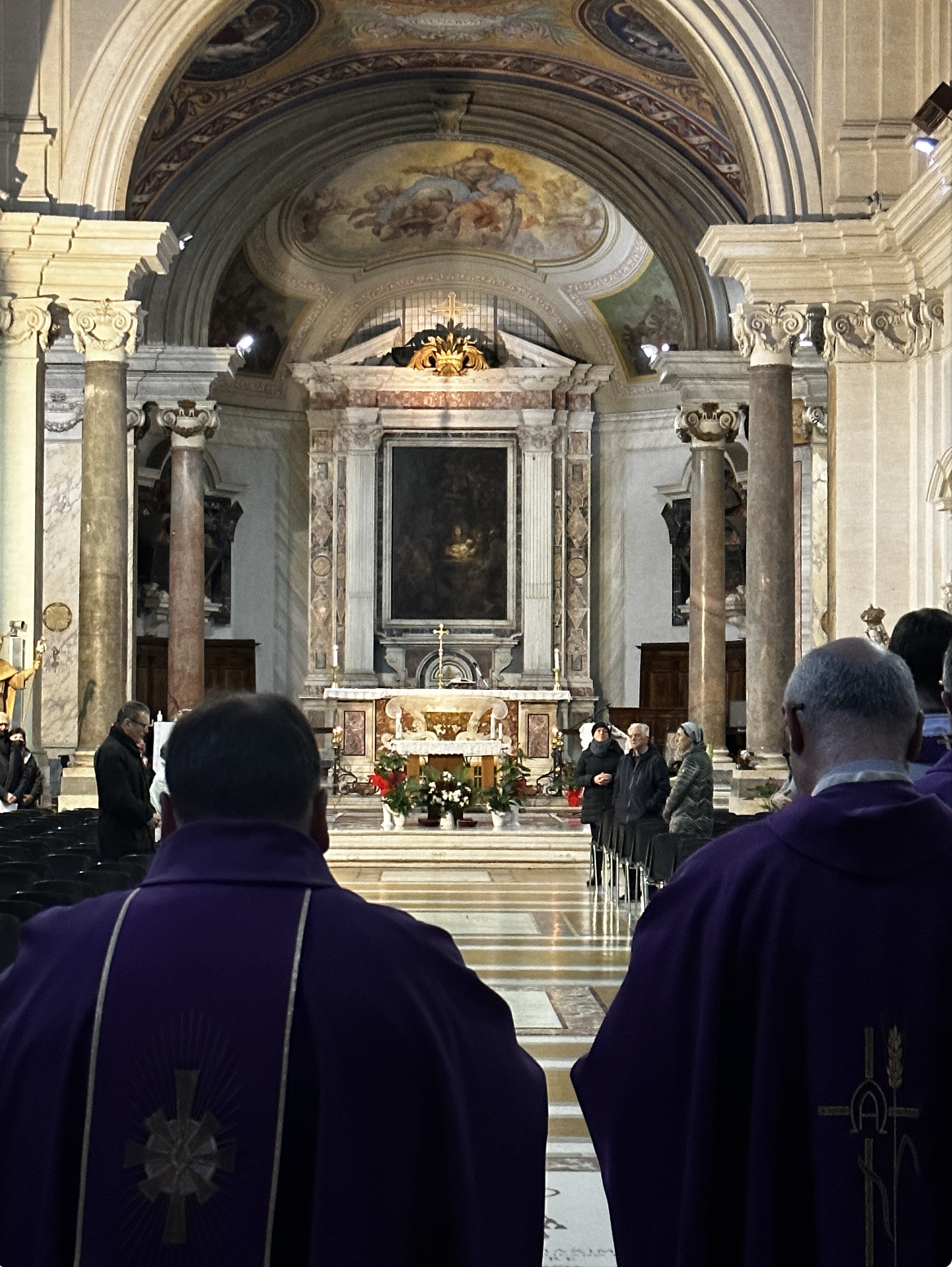
Anastasia, a martyr of Sirmium, was martyred in the persecution of Emperor Diocletian. Her relics were later taken to Constantinople and enshrined in a church called the Anastasis, meaning resurrection. This connection to the Paschal mystery is significant, considering the church’s role as a titular church during the Lenten season.
The current Basilica, standing on the Palatine Hill, holds an eminent rank among the churches of Rome. Only two churches preceded it in honor – St. John Lateran and St. Mary Major. The statue of Saint Anastasia in front of the high altar, sculpted by Francesco Aprile, reflects the Paschal theme, resembling the Statue of Santa Cecilia by Stefano Maderno.
Throughout its history, this basilica played a crucial role. Saint Jerome is said to have preached here in 450 against the heresy of monophysitism. Monophysitism asserted that the person of Jesus Christ has only one, divine nature rather than the two natures, divine and human, that were defined at the Council of Chalcedon in 451. The church is subsequently mentioned in various historical records, including a 7th-century pilgrim itinerary.
Interestingly, the Basilica di Sant’Anastasia was the keeper of the crosses used during the Lenten Stations, giving rise to the term “Crux Stationalis” for this channel. The crosses, symbolizing each neighborhood of Rome, were carried in processions from a Collect Church to the day’s Station Church.
While the former prominence of Saint Anastasia and her church has diminished, the commemoration of her at the Mass at Dawn on Christmas day remains a poignant reminder of the church’s historical significance. Rome, with its rich blend of ancient history, secular triumphs, and Christian heritage, showcases the Basilica di Sant’Anastasia as a testament to the enduring legacy of faith.
 Crux Stationalis