The enduring devotion to the Madonna Salus Populi Romani at Santa Maria Maggiore
Welcome back to Crux Stationalis! In today’s exploration, we delve into the Roman Station Church of Santa Maria Maggiore, also known as Saint Mary Major. Don’t forget to subscribe to our YouTube channel, like this video, and share it with your family and friends.
We’ve extensively explored Santa Maria Maggiore here at Crux Stationalis, and today we focus on a particular devotion that has defined Rome – the Madonna Salus Populi Romani, (Salvation of the Roman People, salvation in the sense of health/protectress). This title, given in the 19th century to a Byzantine icon found in the Pauline Chapel of the Basilica of Santa Maria Maggiore, holds a rich history.
The expression “Salus Populi Romani” dates back to the ancient Roman Republic’s legal system and Pagan rituals. Temples were dedicated to the health of the Roman people, depicted as a goddess enthroned with a snake. It wasn’t until the reign of Emperor Theodosius I that this title became associated with the Mother of God.
The icon is believed to be from the first Christian millennium, possibly painted by Saint Luke himself. For centuries, it adorned the lintel of the baptistry door and, in 1240, was titled Regina Coeli, Queen of Heaven. Since 1613, it has been above the altar of the Pauline Chapel, specially built for this sacred image.
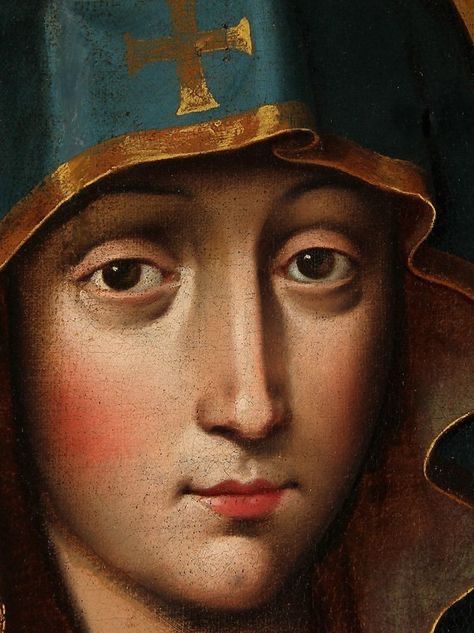
The Liberian Basilica’s history, founded by Pope Liberius and enlarged by Sixtus III, connects the venerated image to Saint Helen, mother of Constantine, in the 4th century. The Byzantine-style icon depicts the Virgin and Child, symbolizing Mary as the Queen of Heaven.
Despite a decline in devotion over the centuries, the Madonna Salus Populi Romani remains a significant Marian icon in Rome. Since the 15th century, it has been venerated as miraculous, gaining prominence during the pontificate of Pope Pius XII, who honored it during the proclamation of the Assumption of Mary in 1950.

In 1953, the icon was processed through Rome, marking the first Marian year in the church’s history. Pope Pius XII personally crowned it as Queen of the World at Saint Peter’s Basilica. The icon has been a focal point for popes throughout history, invoked during times of plague, battles, and epidemics.
The city of Rome, historically linked to Mary Salus Populi Romani, has seen numerous manifestations of popular piety. The devotion extended to various Saints, with examples like Saint Paul of the Cross, who took a religious vow before the Madonna, leading to the establishment of the fourth vow of the Passionist Congregation.
The exact period of the icon’s placement in Santa Maria Maggiore is uncertain, but its centuries-old cult and veneration are well-documented. Popes, starting with Gregory the Great in 593, have demonstrated filial Marian piety, especially during solemn processions on the Feast of the Assumption.
In the 16th century, the Society of Jesus played a crucial role in spreading the devotion globally. Jesuit missionaries carried copies of the icon to distant regions of the East, including China. The Byzantine icon became the first globalized image of the Mother of God.
The Madonna Salus Populi Romani continues to be a symbol of hope, protection, and devotion for Romans and missionaries alike. As we explore this rich history, may our own devotion to her grow, connecting us to the enduring legacy of faith in the heart of Rome.
 Crux Stationalis