Exploring Saint Peter’s Basilica: Bernini’s Baroque Masterpiece
Welcome back to Crux Stationalis! The Roman Station Church Network:Today, our journey takes us to the heart of the Catholic Church – Saint Peter’s Basilica. As we step into this magnificent Roman Station Church, we’ll unravel the dramatic and colorful world of Baroque art, particularly the extraordinary contributions of Gian Lorenzo Bernini.
***IF VIEWING FROM EMAIL, CLICK ON TITLE OF ARTICLE FOR YOUTUBE VIDEO***
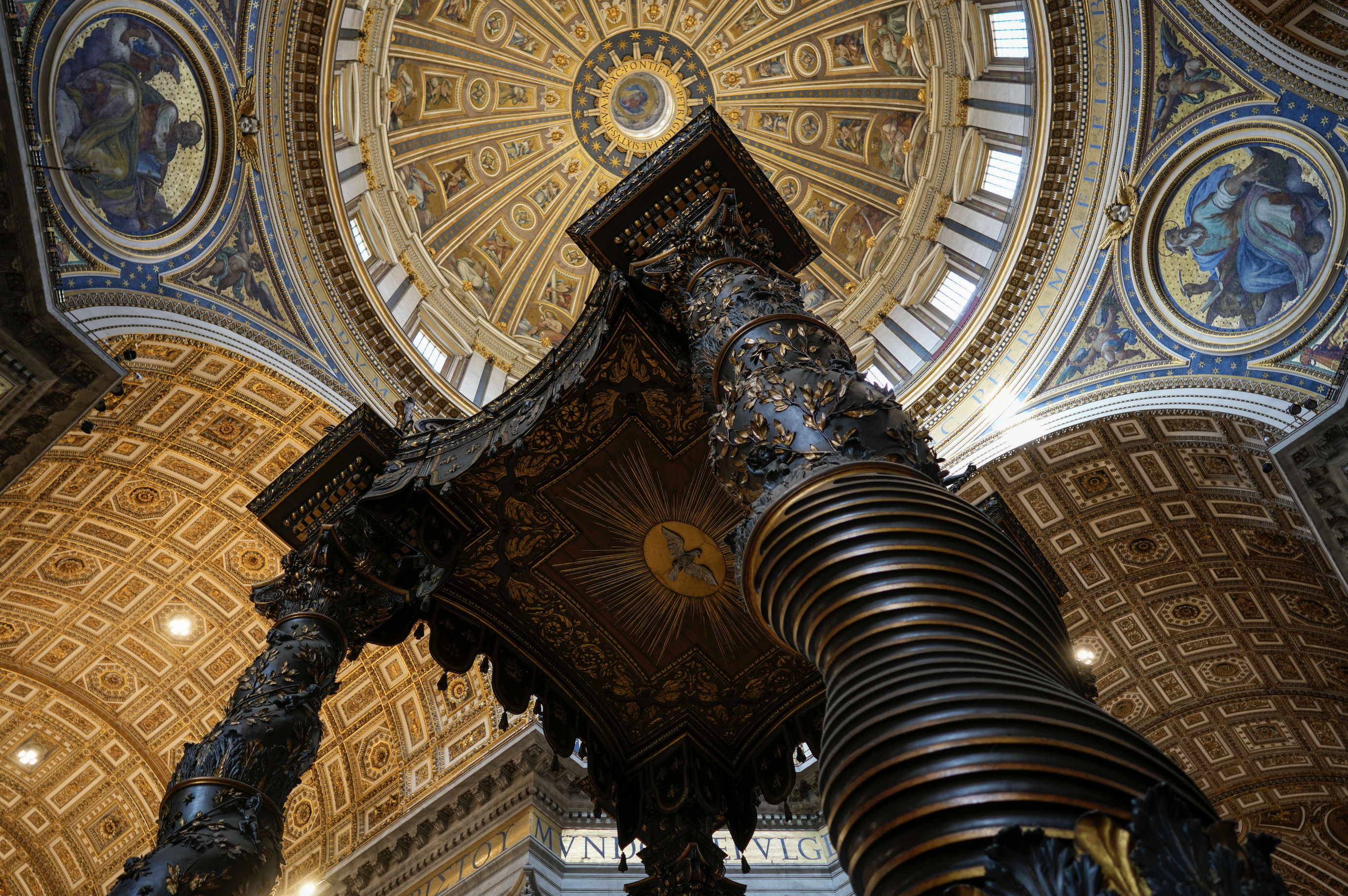
Bernini’s Baroque: A Spectacle of Color and Emotion
The Baroque era, exemplified by Bernini’s genius, is a spectacle of color, emotion, and drama. This artistic movement emerged as a response to the needs of the Counter-Reformation, with Bernini’s Baroque aiming to move the masses and serve religion. It was a form of popular art that engaged the senses and stirred deep emotions, creating an immersive world within the confines of churches.
Symbolism in Baroque Art: Beyond the Surface
In the Baroque, symbols expressing faith multiplied and layered, encompassing liturgy, art, and architecture. These symbols were more than visual elements – they pointed beyond themselves, inviting viewers to contemplate something transcendent. Bernini’s Baroque creations, whether sculptures or architectural marvels, were designed to lead observers to a reality beyond the physical, touching the supernatural.
Bernini’s Mastery of Baroque: The Grand Guide of Saint Peter’s
Gian Lorenzo Bernini, a Neapolitan-born artist, became the grand guide of the Baroque experience at Saint Peter’s Basilica. His art transcended traditional boundaries, incorporating elements like the pilasters and pavement. With a keen eye for detail, Bernini camouflaged physical structures, creating an illusion of bronze that floated, twisted, and turned, epitomizing the movement of the Baroque.
The Papal Connection: Bernini’s Patronage by Pope Urban VIII
At the age of 25, Bernini entered the service of Pope Urban VIII, Maffeo Barberini, forming a relationship that preceded the pope’s pontificate by 15 years. Bernini’s extreme talent flourished under Urban VIII’s patronage, leading to a profound impact on the Baroque movement. The pope viewed Bernini almost like a son, and this connection would shape the artistic landscape of Saint Peter’s Basilica.
The Baldacchino: A Baroque Masterpiece Above the Papal Altar
One of Bernini’s early commissions was the creation of the baldacchino above the papal altar. This intricate masterpiece, inspired by the canopy over the gestatoria used to carry the Pope in procession and a twisted column from Constantine’s original Basilica, stands as a testament to the extravagance and cost of Baroque art. The bronze used, taken even from the Pantheon’s portico, highlights the grandeur of Bernini’s vision.
Bernini’s Religious Practices: Sustaining Artistic Genius
Bernini’s artistic career was deeply intertwined with his religious practices. Following the exercises of Saint Ignatius of Loyola and receiving communion twice a week (a unique practice in his time), Bernini’s creations were an expression of personal faith. His sculptures and architectural marvels, informed by Catholic theology, embraced the fullness of the human person, mirroring the Ascension of Jesus.
Legacy of a Sublime Artist: Bernini’s Impact on Saint Peter’s
Urban VIII’s elevation to the papacy in 1623 marked a turning point for the Church, with an expectation to return to the humanistic spirit of the Renaissance. Bernini’s patronage and artistic brilliance engaged the Church in the intellectual movements of the 17th century, leaving an indelible mark on Saint Peter’s Basilica. His 51-year tenure as the architect of Saint Peter’s and superintendent of public works in Rome solidified his legacy as a sublime artist.
Conclusion: Baroque Drama and Spiritual Depth
In concluding our exploration of Saint Peter’s Basilica and Bernini’s Baroque masterpiece, we recognize the drama, color, and emotion embedded in this artistic movement. Bernini’s profound connection with Pope Urban VIII and his deep religious practices enriched the Church’s visual and spiritual experience. As we stand before the monumental creations of the Baroque, we are invited to cast our nets into the deep, embracing the fullness of the human experience and keeping our eyes fixed on Christ amidst life’s storms. Stay tuned for more enriching journeys with Crux Stationalis!
 Crux Stationalis