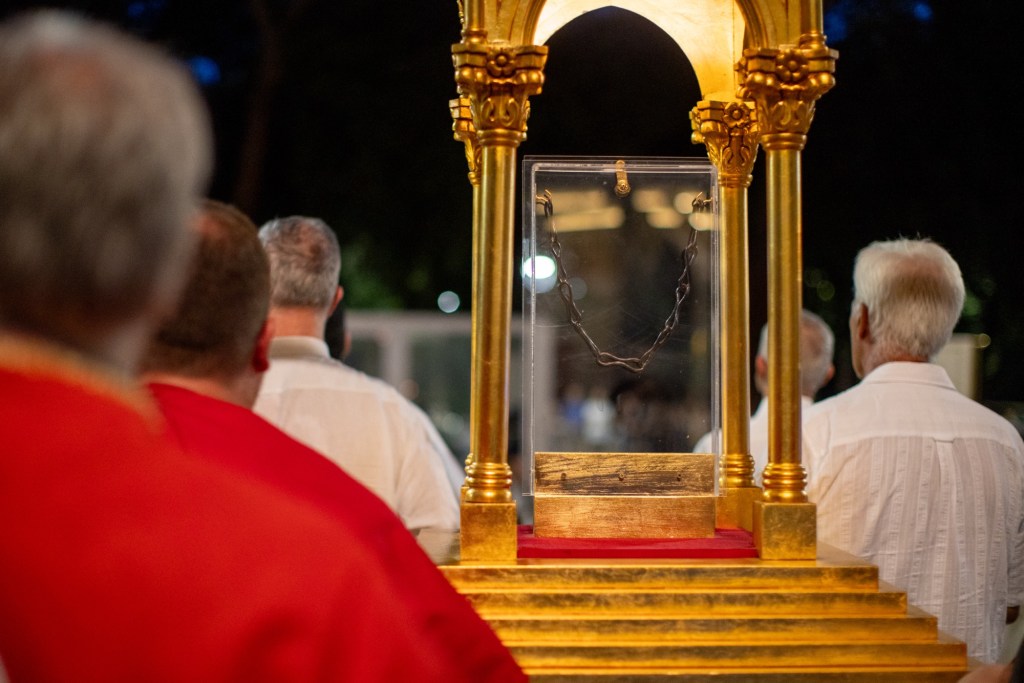
On June 29, 2024, in the heat of the summer evening, the Holy Chains of the Apostle Saint Paul were processed through the streets of the neighborhood surrounding the Basilica of Saint Paul’s Outside the Walls to commemorate the Solemnity of Saints Peter and Paul.
The Basilica of Saint Paul’s Outside the Walls is built over the tomb of a former persecutor of Christians. The Pharisee Saul of Tarsus who persecuted Saint Stephen, the first martyr of the Christian faith, would later convert and become the Apostle to the Gentiles, the 13th Apostle. He would then be martyred himself, in Rome.

As a Roman citizen, he was not crucified like the other prince Apostle Saint Peter, but had the “privilege” of the more merciful martyrdom of beheading. His head would bounce three times and three springs would flow from these hallowed spots. We can visit these flowing fountains in the Church of Tre Fontane (or, Three Fountains, in Italian). After his martyrdom, Saint Paul would then be buried in the Roman cemetery situated where the basilica now sits.

The Basilica of St. Paul’s Outside the Walls is a major papal basilica along with the basilicas of St. John Lateran, St. Mary Major, and St. Peter’s. An American Cardinal, Cardinal Harvey, has been the Archpriest of the basilica since 2012. The complex also houses a Benedictine Abbey.
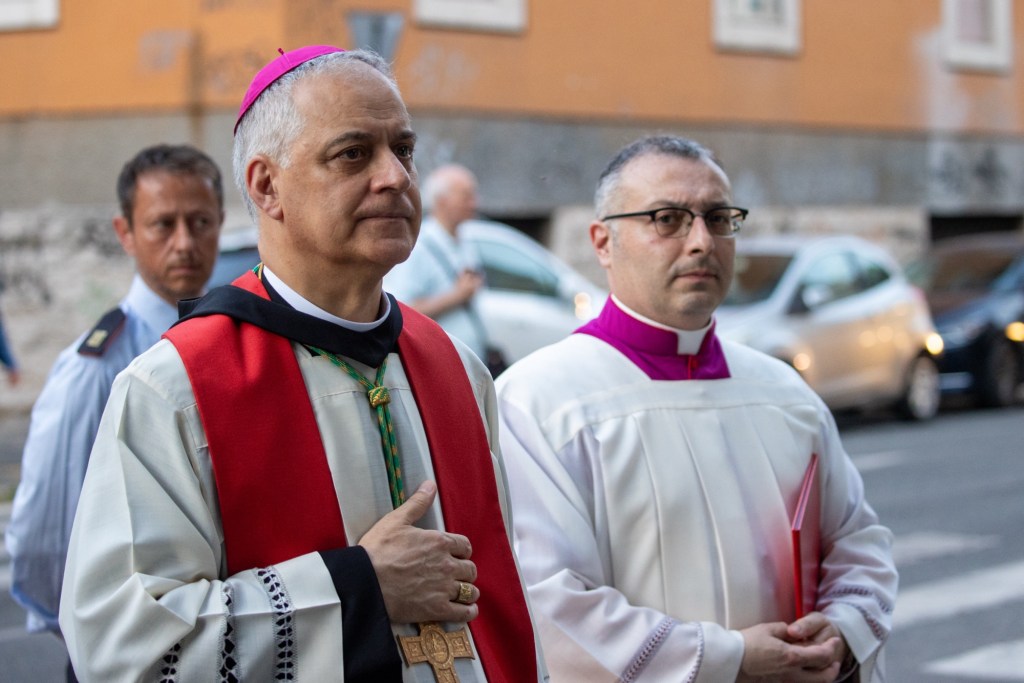
The ancient tradition of processing the Holy Chains of Saint Paul belongs to the devotion of the monks who have been present in the Basilica since the pontificate of Pope Saint Gregory the Great (pope from 590-640). The chains which bound the Apostle to his guard during his arrest now by this procession embrace the neighborhood which surrounds the tomb of Saint Paul.

The procession took to the streets of Rome after the Second World War, in 1949, processing from the nearby church of St. Benedict down via Ostiense to the Pauline basilica. The elderly of the neighborhood still remember the hymn written in 1951 in honor of the saint. The children of the catechism classes taught by the monks were encouraged to learn the song in exchange for a free ticket to the local movie theater.
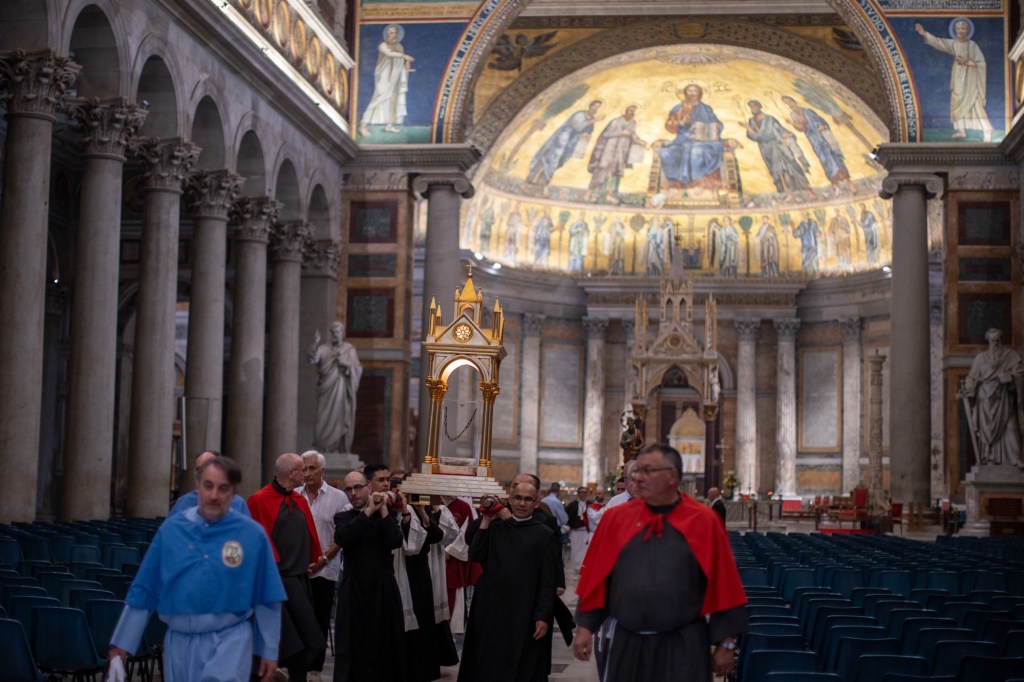
This modern-day procession has returned to its former glory with a new route since 2019, beginning and ending in the basilica. To start the procession, the Abbot places the chains into the processional reliquary modeled after the ciborium designed by Arnolfo di Cambio which marks the tomb of the saint. The monks then carry the Holy Chains through the basilica and its courtyard to greet the lay faithful, religious men and women, policemen, and civil servicemen and women with the relics of the Holy Chains.
This year for the first time, the monks then passed the reliquary to members of various Roman confraternities and an archconfraternity who then carried the Holy Chains and a statue of St. Paul through the neighboring streets.

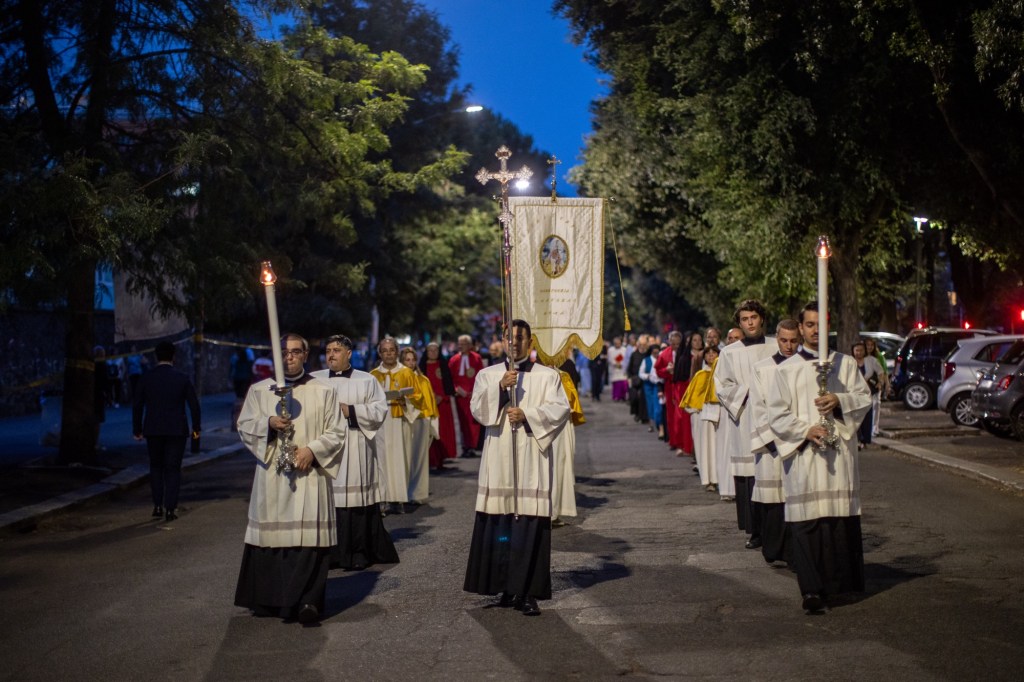
During the procession, all present were led in prayer with litanies to St. Paul asking for his intercession and meditating upon different titles of the great prince Apostle and co-Patron Saint of Rome, such as: “Apostle of the Father’s Mercy,” “Preacher of Truth,” and “Conquered by the Love of Christ,” among others.

The Abbot and the monks of the Abbey participated in the procession with representatives from the local municipality, the metropolitan police, the Carabinieri, and the Guardia di Finanza. Numerous priests, religious sisters, confraternities, and lay faithful were also present.
The one-hour long procession returned to the porch of the basilica. The marching band from the hill-town of Frascati just South of Rome played a glorious hymn followed by the Italian National Anthem. Then the Abbot took the Holy Chains from the reliquary and imparted his Solemn Blessing with the chains in hand.
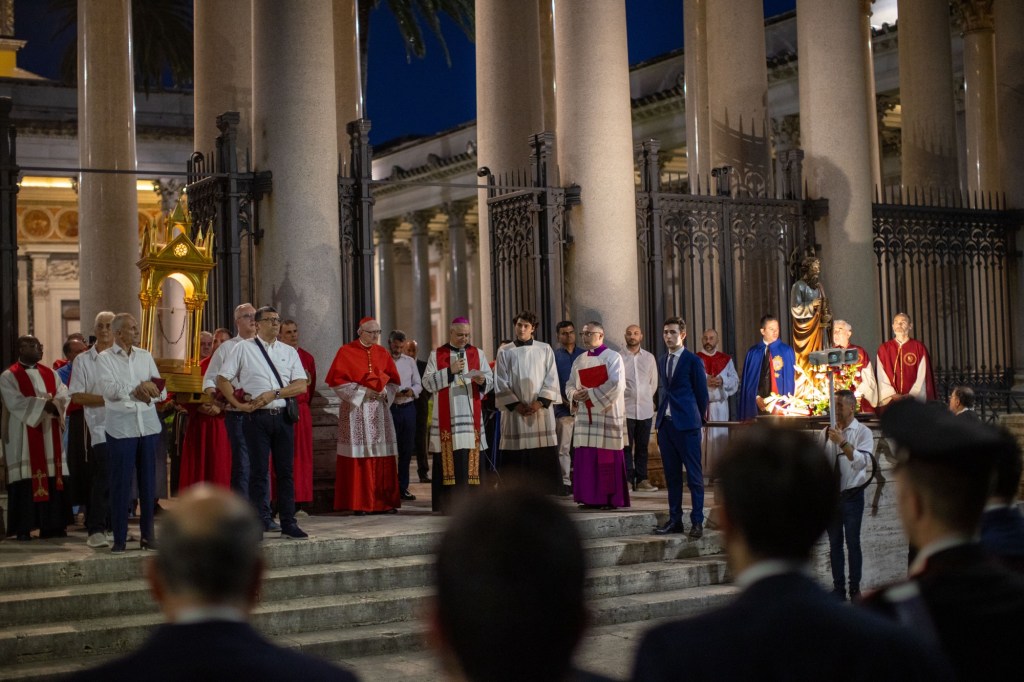
Processing back into the basilica as the bells pealed, once arrived at the tomb of Saint Paul, the Abbot provided the opportunity for Cardinal Harvey, the monks, the priests, and those who carried the Holy Chains and statue of St. Paul to reverence the relic of the Holy Chains with a kiss before returning the chains to their reliquary.

 Crux Stationalis