Ash Wednesday: Basilica of Santa Sabina
Since the pontificate of Pope St. John XXIII, the Pope has traditionally celebrated the Ash Wednesday Roman Stational liturgy — hearkening back to the early centuries of the Church after the legalization of Christianity and the development of the Roman Station Church pilgrimage itinerary: processing from one tomb of a martyr to another tomb honoring the early witness of the first Christians whose blood became the seed of the Church [Tertullian].
Yet again, due to circumstances beyond his control, Pope Francis will not be leading the Lenten liturgy at Santa Sabina [5 March 2025; 16:30], instead Cardinal de Donatis, former Vicar Cardinal of Rome, will celebrate the liturgy, with a penitential procession from the Church of St. Anselm to the Basilica of Santa Sabina on the Aventine Hill
Pope Francis has not celebrated the Ash Wednesday liturgy at Santa Sabina every year of his pontificate.
For example:
- In 2021 and 2022, due to the COVID-19 pandemic, the pope presided over the Ash Wednesday liturgy at St. Peter’s Basilica instead of Santa Sabina.
- In 2023, due to his mobility issues, he did not participate in the traditional procession but still celebrated Mass at Santa Sabina.
In 2024, he presided over the liturgy instead of celebrating at Santa Sabina, continuing the shift seen in previous years due to his health.
Lenten Pilgrimage with Crux Stationalis
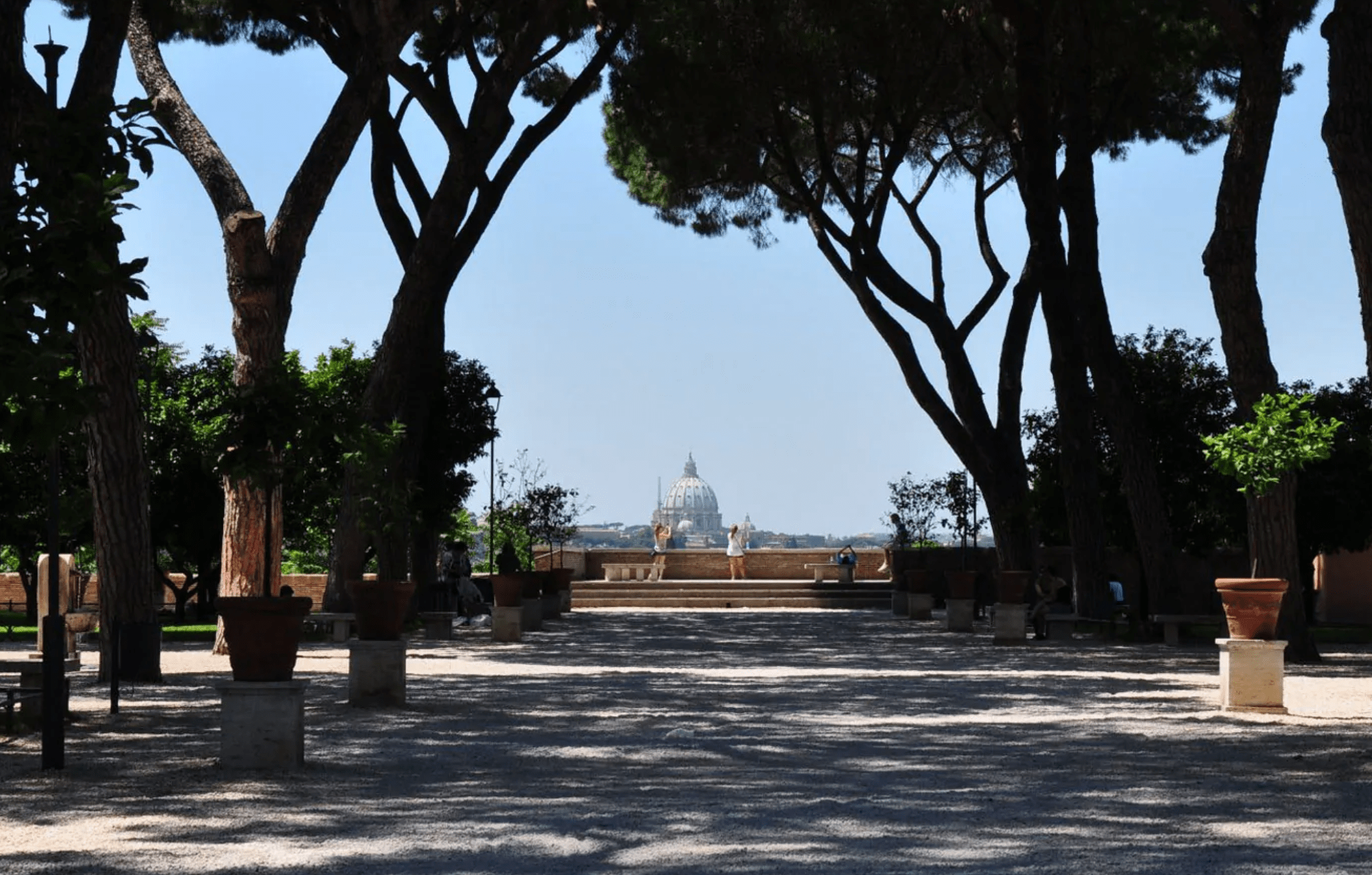
As the Church begins her great Lenten pilgrimage each year, the faithful gather at Santa Sabina on Ash Wednesday. This ancient basilica, perched on the Aventine Hill, stands as a gateway to the season of penance, just as it has stood as a witness to centuries of Christian devotion and monastic life.
An Enduring Witness to the Early Church
Built between 422 and 432 AD under Pope Celestine I, Santa Sabina is one of the most intact early Christian basilicas in Rome. Its dedication to Saint Sabina, a second-century Roman matron and martyr, ties it to the blood witness of the early Church, a theme that permeates the city’s sacred landscape. The basilica’s design follows the traditional Roman form: a long, colonnaded nave leading the faithful toward the high altar and apse. Unlike the later Baroque embellishments that would transform many Roman churches, Santa Sabina retains its sober, luminous simplicity—a reminder of the austere beauty of the primitive Church.
One of its most striking features is the great wooden door, dating to around 430 AD, which contains the oldest known depiction of the Crucifixion. This is remarkable because early Christian art often emphasized the Resurrection and victory of Christ rather than His suffering. The inclusion of the Crucifixion on the doors suggests a deepening theological reflection on the Paschal Mystery—one that would find its fullest expression in the liturgical life of the Church.
The Dominican Heart of the Aventine
In 1219, nearly 800 years after its founding, Santa Sabina became the mother church of the newly established Order of Preachers. St. Dominic himself lived here, and his cell—later transformed into a chapel—remains a place of profound pilgrimage. The presence of the Dominicans gave the basilica a new role, not only as a place of worship but as a center of theological study and formation.
It was from Santa Sabina that St. Thomas Aquinas, the Angelic Doctor, set out to teach at the nearby Studium in Rome. The intellectual and spiritual patrimony of the Order has continued to shape the life of the Church, making Santa Sabina not only a monument of antiquity but a living house of prayer and study.
The Lenten Station Church of Ash Wednesday
Santa Sabina is forever linked to the opening of Lent. The tradition of the Roman stational liturgy, which reaches back to the earliest centuries of the Church, marks this basilica as the first stop on the forty-day journey to Easter. Each year, the Pope himself comes to Santa Sabina to receive ashes and to lead the faithful in the solemn procession and Mass, calling back to the daily participation of the Pope in the Roman Station Church pilgrim itinerary.
The setting is fitting. The Aventine Hill, quiet and contemplative, stands apart from the bustle of the city, allowing the pilgrim to enter into the stillness necessary for the season ahead. The basilica’s unadorned interior, its ancient wooden ceiling, and its long, echoing nave invite recollection and repentance. Here, on this sacred threshold, the words of the prophet resound: Memento, homo, quia pulvis es, et in pulverem reverteris—“Remember, man, that you are dust, and to dust you shall return.”
A Monument of Continuity
Unlike many of Rome’s great churches, what the pilgrim sees today is, in many ways, what the Christians of the fifth century would have seen. The preservation of its form, from the high clerestory windows to the delicate inlaid marble of the schola cantorum, allows it to remain a bridge to the history of the Church.
In a city where the layers of history are constantly shifting, Santa Sabina is a reminder of the Church’s continuity. It remains a place where the faithful can encounter the same truths that sustained the early martyrs, the same ascetic fervor that inspired St. Dominic, and the same penitential spirit that marks the beginning of every Lent.
For the pilgrim walking the path of the Crux Stationalis, Santa Sabina is not just a historical landmark—it is a living signpost on the journey toward the Cross and Resurrection.
The website for Santa Sabina is here.
If you appreciate our work you can become a Patron at our Patreon. Or, please consider a one time gift offering via PayPal.
Don’t forget to subscribe here to stay up-to-date with the ancient pilgrimage in Rome of the Roman Station Churches and other beautiful traditions from Rome and the Vatican!
 Crux Stationalis