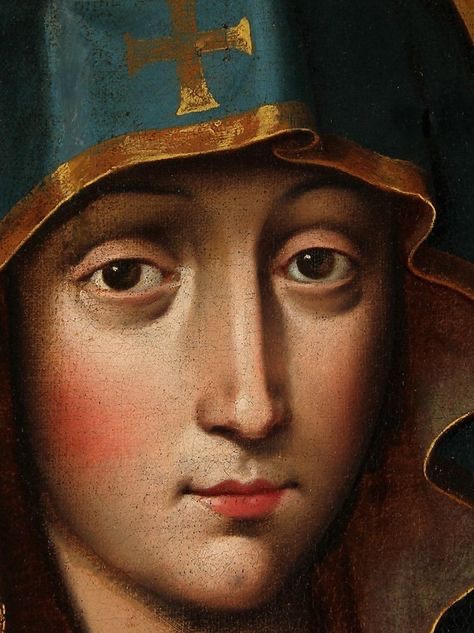
Welcome back to Crux Stationalis! Today, we’re heading to one of the most beloved Marian shrines in Rome—Santa Maria Maggiore—to talk about a devotion that has shaped the faith of the Eternal City: the Madonna Salus Populi Romani.
Before we dive in, don’t forget to subscribe to our YouTube channel, give this video a like, and share it with your friends and family!
Podcast: St. Mary Major
A Title with Deep Roots
We’ve covered Santa Maria Maggiore in depth here at Crux Stationalis, but today we’re focusing on one particular treasure: a Byzantine icon tucked away in the Basilica’s Pauline Chapel. Known as Salus Populi Romani—which translates to “Salvation of the Roman People” (in the sense of protector and source of well-being)—this image has been at the heart of Roman devotion for centuries.
The phrase Salus Populi Romani actually goes way back to the days of the Roman Republic, when it was used in legal and religious contexts. Back then, Rome even had temples dedicated to the “health” of the people, with the concept often represented by a goddess seated on a throne with a snake. It wasn’t until Christianity took root—especially under Emperor Theodosius I—that the title became associated with the Virgin Mary.
An Icon with a Storied Past
Legend has it that this image of Mary and the Christ Child might have been painted by Saint Luke himself. Whether or not that’s true, we do know that the icon has been venerated for well over a thousand years. In the 13th century, it was even given the title Regina Coeli—Queen of Heaven.
Since 1613, the icon has had a special home above the altar in the Pauline Chapel, built specifically for its veneration. The Basilica itself, originally founded by Pope Liberius in the 4th century and expanded by Sixtus III, has long been associated with the devotion to Mary. Some even connect the Salus Populi Romani to Saint Helen, the mother of Constantine, reinforcing its deep roots in Christian history.
A Devotion That Stands the Test of Time
One thing remains clear: this image has always been a source of hope for the people of Rome. By the 15th century, it was already regarded as miraculous, and during the pontificate of Pope Pius XII, it took on even greater significance.
In 1950, Pius XII honored the Madonna during the proclamation of the Assumption of Mary. A few years later, in 1953, the icon was carried in procession through the streets of Rome as part of the first-ever Marian Year in Church history. That same year, the Pope himself crowned her Queen of the World at Saint Peter’s Basilica.
But this devotion isn’t just for popes—it has been deeply woven into the lives of countless saints and ordinary Romans. Saint Paul of the Cross, for example, took a religious vow before this very icon, which led to the Passionist Congregation adopting a fourth vow in their order.
A Global Icon
It’s unclear exactly when Salus Populi Romani first arrived at Santa Maria Maggiore, but what’s certain is that the devotion has stood the test of time. Since the 6th century, popes—starting with Gregory the Great in 593—have led processions with the icon, especially on the Feast of the Assumption.
In the 16th century, the Jesuits helped spread this devotion across the world, carrying copies of the image to distant lands, including China. In many ways, Salus Populi Romani became the first truly globalized image of the Virgin Mary.
A Living Devotion
To this day, the Madonna Salus Populi Romani remains one of the most beloved Marian icons in Rome. She has been called upon in times of plague, war, and crisis, and she continues to be a sign of protection and comfort for missionaries and the faithful worldwide.
As we reflect on her story, may our own love for the Mother of God grow, drawing us deeper into the faith that has stood strong in the heart of Rome for centuries.
If you need a helpful book of meditations for this Season of Lent, check out my publication of meditations on the Passion of Jesus written for young Passionist novices.
31 Days of Meditation on the Passion of Jesus: BUY NOW
If you appreciate our work you can become a Patron at our Patreon. Or, please consider a one time gift offering via PayPal.
Don’t forget to subscribe here to stay up-to-date with the ancient pilgrimage in Rome of the Roman Station Churches and other beautiful traditions from Rome and the Vatican!
 Crux Stationalis