The Lenten Station
On the Wednesday of the Third Week of Lent, the Roman stational tradition gathers the faithful at San Sisto Vecchio, an ancient basilica located near the Via Appia in the rione Celio. Hidden slightly away from the main thoroughfares of the city, the church preserves one of the oldest monastic and parish traditions in Rome. The station here situates the Lenten pilgrimage within a basilica that connects early Christian Rome with centuries of religious life and reform.
The church is dedicated to Pope Saint Sixtus II, a third-century bishop of Rome who was martyred in 258 AD during the persecution of Emperor Valerian. His death, along with that of his deacons — including Saint Lawrence — became one of the defining moments of the early Roman Church.
Video Tour of San Sisto Vecchio
Early Christian Origins
San Sisto Vecchio traces its origins to the 4th century, making it one of the early Christian basilicas established after the legalization of Christianity in the Roman Empire. The church is recorded in early documents under the name Titulus Crescentianae, likely referring to a Roman woman named Crescentia who either founded or financed the original basilica.
Tradition associates the formal foundation of the church with Pope Anastasius I (399–401). Over time, the dedication shifted from the founder’s name to that of Saint Sixtus II, whose relics were transferred here from the Catacombs of Saint Callixtus in the 6th century.
Because of this connection to the martyr pope, the basilica became a place of pilgrimage for those honoring the memory of the early bishops of Rome.
Medieval Reconstruction
The church underwent significant rebuilding during the early 13th century under Pope Innocent III. This reconstruction replaced much of the earlier basilica while preserving key elements of its structure. From this medieval phase remain parts of the apse and the bell tower, which still mark the skyline of the complex today.
The medieval rebuilding also introduced a cycle of 13th-century frescoes depicting scenes from the New Testament and the apocryphal traditions. Although some of these paintings have deteriorated over time, they remain an important witness to the artistic and theological culture of medieval Rome.
Dominican Reform and Monastic Life
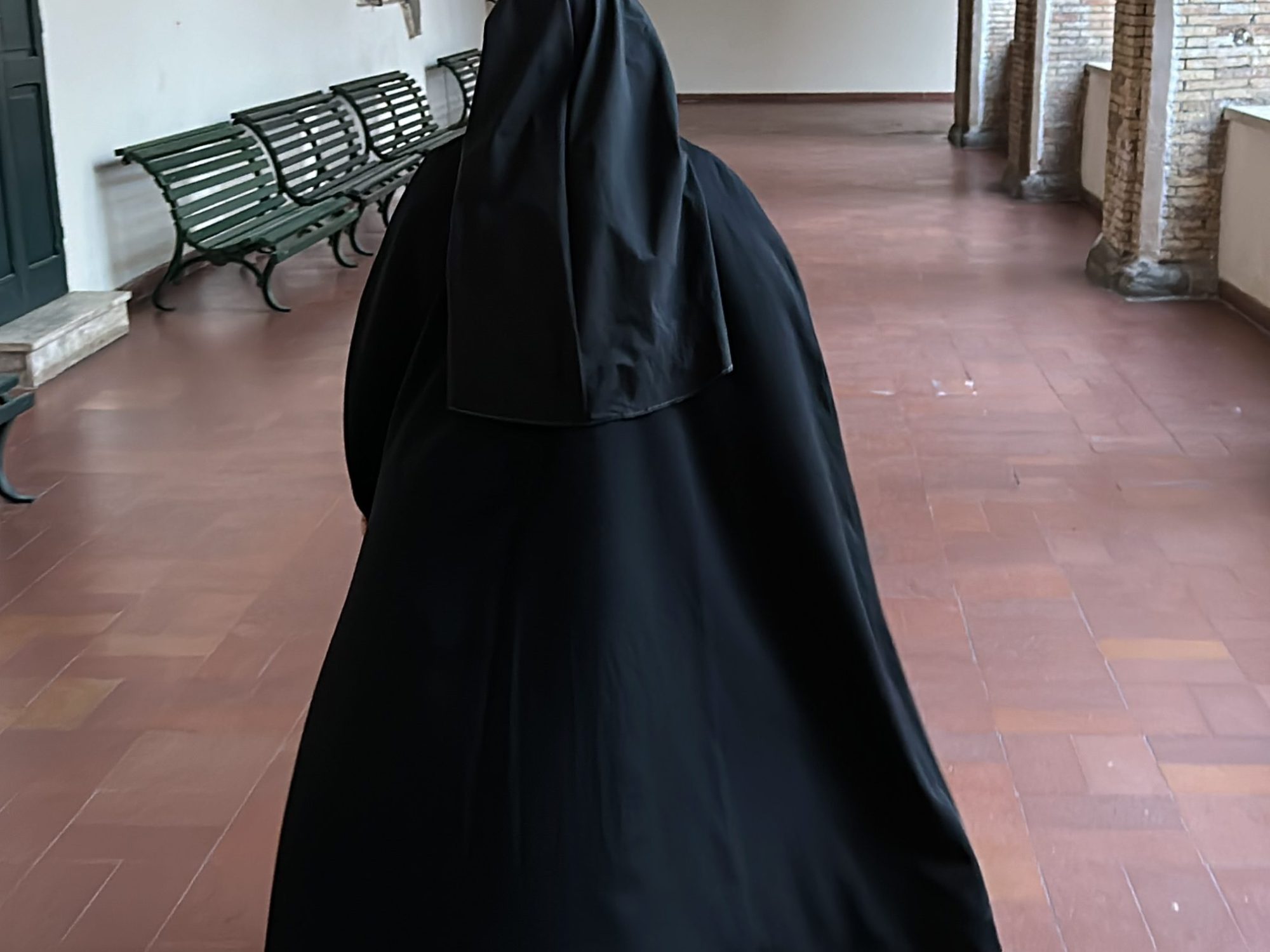
San Sisto Vecchio played a crucial role in the history of the Dominican Order. In the early 13th century, Pope Honorius III entrusted the reform of religious life in Rome to Saint Dominic. As part of this effort, Dominic gathered communities of nuns and established a reformed convent at San Sisto.
This community became the first Dominican convent in Rome, marking the beginning of a long association between the basilica and Dominican religious life. The monastery attached to the church continued to house Dominican nuns for centuries and remains connected with that tradition today.
Baroque Restoration
The appearance of the church today is largely the result of an 18th-century restoration ordered by Pope Benedict XIII and carried out by the architect Filippo Raguzzini. Much of the earlier structure was rebuilt, though the medieval apse and bell tower were preserved.
These renovations gave the church a Baroque character while maintaining visible traces of its early and medieval past.
The Station Significance
As the station church for this day of Lent, San Sisto Vecchio brings the faithful into contact with multiple layers of Roman Christian history: the memory of a martyred pope, the development of early parish churches, and the reform of religious life in the Middle Ages.
Here, near the ancient Appian Way, the Lenten pilgrimage pauses in a basilica shaped by martyrdom, monastic discipline, and centuries of prayer — a reminder that the Church’s path through history is marked by witness, reform, and continuity.
Receive these articles daily in your inbox by subscribing here:
And please share this article with your family and friends — every share helps our fellow Catholic brothers and sisters discover Rome’s most ancient treasures, and hopefully brings edification through the liturgical season of Lent.
The full Lenten itinerary can be found here at the sticky post with links to every video tour of the Roman Station Churches available at Crux Stationalis.
I propose two works for your Lenten meditations and beyond Lent to concentrate your prayer on the Passion of Christ and his Love for you in His Passion: 31 Days of Meditations on the Passion written by a Passionist Father and Flowers of the Passion by St. Paul of the Cross.
 Crux Stationalis