The Roman Station Tradition
During the season of Lent, the ancient Christian practice of the Roman station churches invites the faithful to gather each day at a particular church in Rome for prayer, penance, and the celebration of the Eucharist. This tradition dates back to the early centuries of Christianity, when the Bishop of Rome and the local Christian community would assemble at designated churches throughout the city. Each station church carries its own spiritual and historical significance, linking the liturgical journey of Lent with the memory of Rome’s martyrs and saints. On the Saturday of the Third Week of Lent, the station church is Santa Susanna, one of Rome’s historic churches dedicated to a revered early Christian martyr.
Explanation of Santa Susanna
Origins in a House Church
The Martyr Saint Susanna
The church is named after Saint Susanna, a Christian woman believed to have lived during the late third century. According to ancient tradition, Susanna came from a noble Roman family and was related to important figures within the early Church. Her father, Gabinus, is said to have been a priest, and her uncle Caius is sometimes identified with a pope of the same name.
Susanna was known for her devotion to Christ and for her vow of consecrated virginity. During the persecution of Christians under the Roman Emperor Diocletian, she refused to marry a pagan suitor who had been proposed by the imperial court. Because she would not abandon her Christian faith or her commitment to God, Susanna was eventually condemned to death and martyred. Her witness to faithfulness and purity made her an enduring example for the early Christian community.
Origins of the Church
The Church of Santa Susanna stands on the site traditionally associated with the home of Susanna’s family. Early Christians often gathered in private houses for worship before Christianity was legalized in the Roman Empire. Over time, the house was transformed into a place of public Christian worship.
The earliest church structure likely dates to the fourth century, when many such house churches were expanded or rebuilt after the end of the persecutions. Throughout the centuries, Santa Susanna underwent several renovations and reconstructions. Despite these changes, the church preserves the memory of one of Rome’s earliest Christian communities.
Architecture and Artistic Heritage
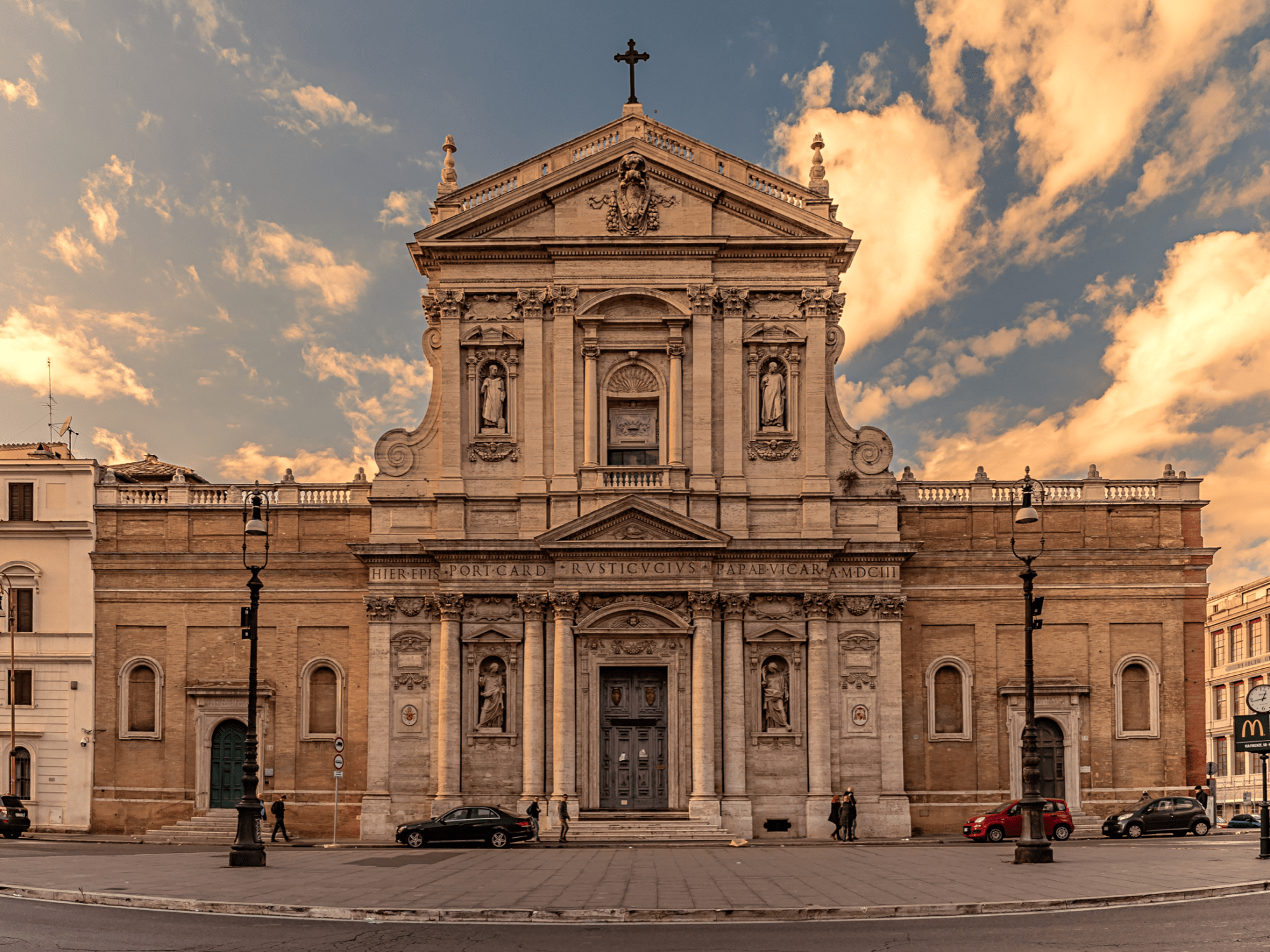
The present façade of Santa Susanna is one of the finest examples of early Baroque architecture in Rome. Designed by the architect Carlo Maderno in the late sixteenth century, the façade features classical columns, balanced proportions, and decorative sculptural elements that give the church an elegant and harmonious appearance.
Inside, the church contains artwork and decorations reflecting different periods of Roman history. Paintings and frescoes illustrate scenes from the life of Saint Susanna and other Christian themes. The artistic program serves not only to beautify the church but also to teach the story of faith and martyrdom to those who enter.
A Lenten Place of Reflection
As the station church for this day of Lent, Santa Susanna offers a fitting setting for reflection on faithfulness under trial. The story of Saint Susanna reminds the faithful that holiness often involves courage and sacrifice. Her steadfast commitment to Christ in the face of persecution echoes the broader Lenten call to conversion, discipline, and trust in God.
Pilgrims who visit Santa Susanna during Lent participate in a tradition that stretches back many centuries. By praying in the place associated with an early Christian martyr, they join generations of believers who have sought renewal of faith during the penitential season. Santa Susanna thus stands as both a historical monument and a living witness to the enduring legacy of Christian devotion in Rome.
Receive these articles daily in your inbox by subscribing here:
And please share this article with your family and friends — every share helps our fellow Catholic brothers and sisters discover Rome’s most ancient treasures, and hopefully brings edification through the liturgical season of Lent.
The full Lenten itinerary can be found here at the sticky post with links to every video tour of the Roman Station Churches available at Crux Stationalis.
I propose two works for your Lenten meditations and beyond Lent to concentrate your prayer on the Passion of Christ and his Love for you in His Passion: 31 Days of Meditations on the Passion written by a Passionist Father and Flowers of the Passion by St. Paul of the Cross.
 Crux Stationalis