The Lenten Station
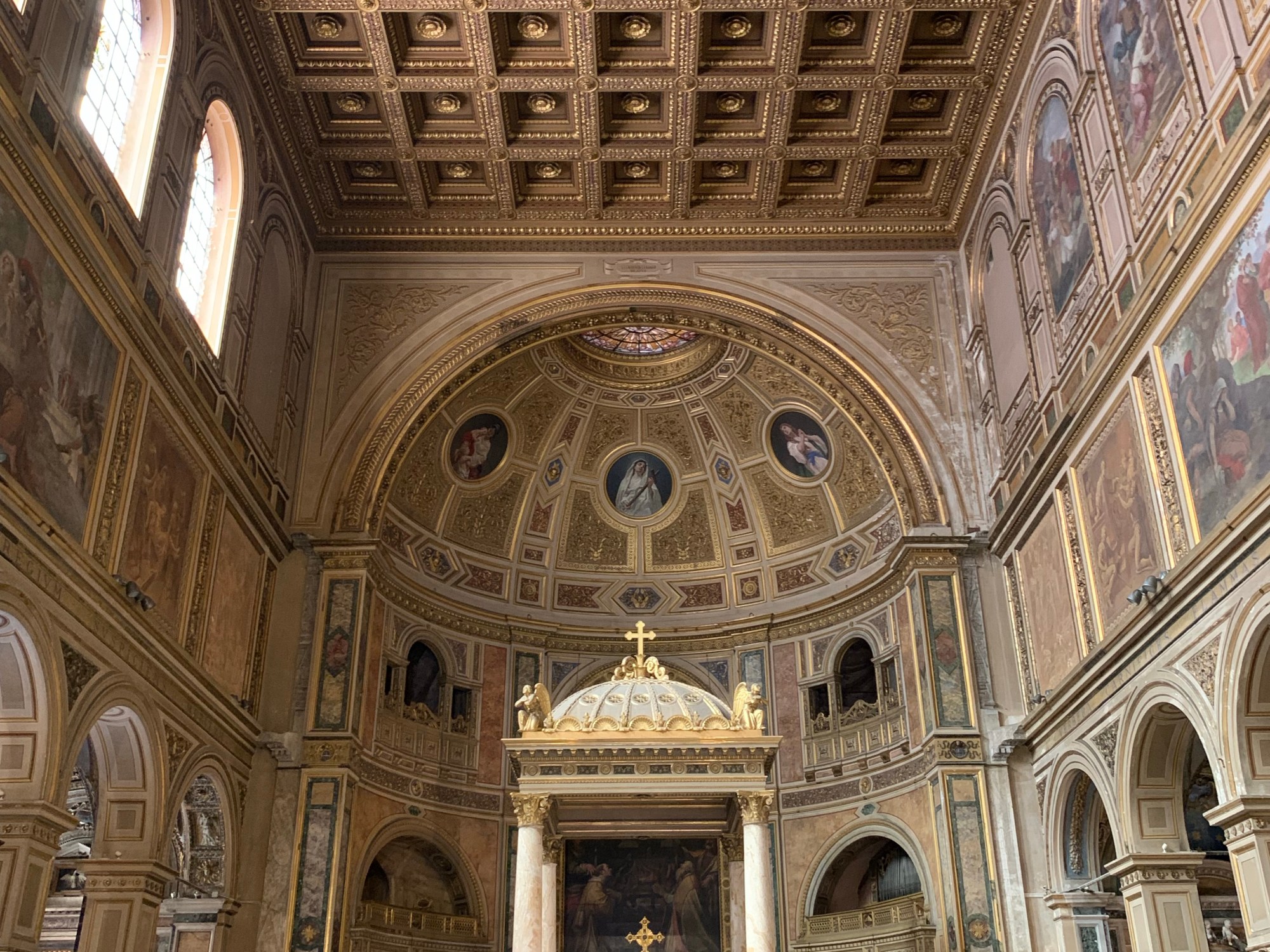
On the Tuesday of the Fourth Week of Lent, the Roman stational tradition gathers the faithful at San Lorenzo in Damaso, a basilica located in Piazza della Cancelleria, near Campo de’ Fiori in the historic center of Rome. Unlike most Roman churches, San Lorenzo in Damaso is not visible as a standalone structure. It is fully incorporated into the Palazzo della Cancelleria, one of the great Renaissance palaces of the city.
This unusual setting reflects the long and layered history of the church, which connects the earliest Christian community in Rome with the later institutional development of the papacy.
Video Tour of San Lorenzo in Damaso
Foundation in the House of Pope Damasus
The origins of San Lorenzo in Damaso date to the late 4th century, when Pope Damasus I (366–384) established a church within his own residence. The site became known as the Titulus Damasi, one of the earliest parish churches of Rome.
A Latin inscription attributed to Pope Damasus commemorates the foundation, noting that he dedicated the building to Christ under the protection of Saint Lawrence, the Roman deacon and martyr.
The church appears in documentary records as early as the synod of 499, confirming its status as an established center of Christian worship in the city.
Dedication to Saint Lawrence
Like several Roman basilicas, San Lorenzo in Damaso is dedicated to Saint Lawrence, martyred in 258 AD during the persecution of Emperor Valerian. His cult was widely promoted in Rome, especially by Pope Damasus, who was known for honoring the martyrs and promoting their veneration.
The title of the church—“in Damaso”—preserves the memory of its founder and its origin within his household. It remains one of the clearest examples of how early Christian worship in Rome developed from domestic settings into public ecclesiastical structures.
The Renaissance Reconstruction
The original basilica no longer survives. In the late 15th century, Cardinal Raffaele Riario, nephew of Pope Sixtus IV, ordered the construction of the Palazzo della Cancelleria. As part of this project, the earlier church was demolished and rebuilt slightly to the north, becoming integrated into the new palace complex.
The reconstruction, likely associated with architects such as Donato Bramante, created the present structure. The church has no independent façade, and its entrance is accessed through the palace.
This integration makes San Lorenzo in Damaso unique among the station churches: it exists not as a freestanding basilica but as part of the administrative heart of the papal Curia.
Interior and Artistic Elements
The interior reflects layers of artistic patronage from the Renaissance and Baroque periods. The basilica follows a three-nave plan, with chapels lining the sides and a broad nave leading to the sanctuary.
The high altar features a painting of the Coronation of the Virgin by Federico Zuccari, while beneath the altar are the relics of Pope Saint Damasus I.
Additional works include a funerary monument designed by Gian Lorenzo Bernini and various frescoes commissioned by Renaissance and Baroque patrons.
The church has undergone several restorations over the centuries, including repairs after damage during the Napoleonic occupation and again following a fire in the 20th century.
The Station Significance
As the station church for this day of Lent, San Lorenzo in Damaso brings the faithful into direct contact with one of the earliest forms of Christian worship in Rome: the transformation of a private house into a place of ecclesial gathering.
At the same time, the church’s incorporation into the Palazzo della Cancelleria reflects the later development of the Church’s visible and institutional presence in the city.
Here, the Lenten pilgrimage pauses in a place where the memory of the martyrs, the life of a pope, and the structure of the Roman Church converge — a reminder that the Church’s history is built both in hidden beginnings and in public witness.
Receive these articles daily in your inbox by subscribing here:
And please share this article with your family and friends — every share helps our fellow Catholic brothers and sisters discover Rome’s most ancient treasures, and hopefully brings edification through the liturgical season of Lent.
The full Lenten itinerary can be found here at the sticky post with links to every video tour of the Roman Station Churches available at Crux Stationalis.
I propose two works for your Lenten meditations and beyond Lent to concentrate your prayer on the Passion of Christ and his Love for you in His Passion: 31 Days of Meditations on the Passion written by a Passionist Father and Flowers of the Passion by St. Paul of the Cross.
 Crux Stationalis