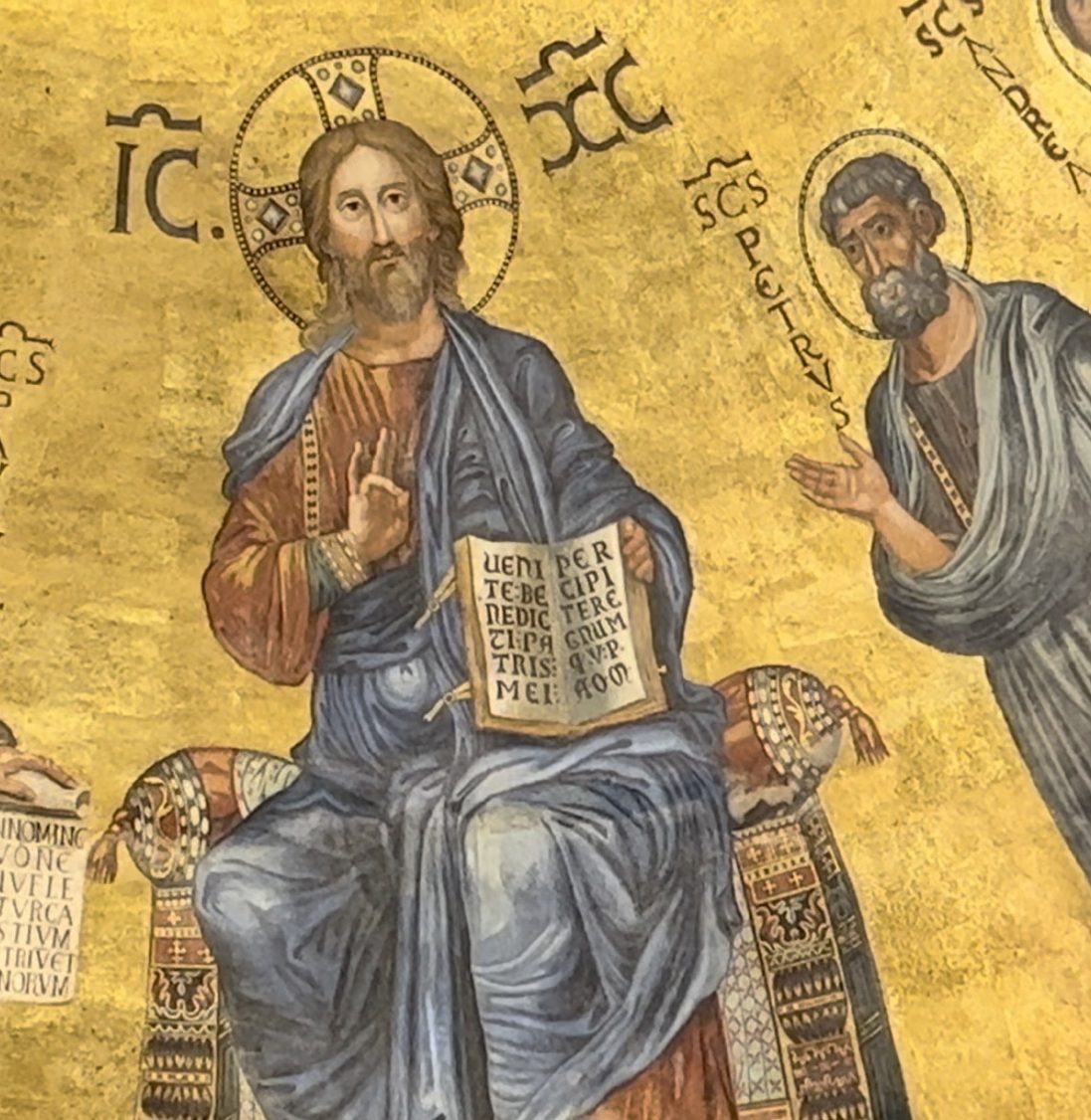
The Lenten Station at the Tomb of the Apostle
On the Wednesday of the Fourth Week of Lent, the Roman stational tradition gathers the faithful at San Paolo fuori le Mura, one of the four major papal basilicas of Rome and one of the most important pilgrimage sites in the Christian world. Located along the Via Ostiense, outside the ancient city walls, the basilica stands over the tomb of Saint Paul the Apostle.
The station on this day brings the Lenten pilgrimage to one of the two principal apostolic shrines of Rome, linking the journey of Lent directly to the witness of the Apostle to the Gentiles.
Video Tour of San Paolo fuori le mura
The Martyrdom and Burial of Saint Paul
According to early Christian tradition, Saint Paul was martyred in Rome around 67 AD, during the persecution of Emperor Nero. As a Roman citizen, he was executed by beheading, and his body was buried in a necropolis along the Via Ostiense.
Very early, Christians marked the site of his burial with a memorial, and devotion to the apostle quickly made this location one of the most important pilgrimage destinations in Rome.
The Constantinian Basilica
Following the legalization of Christianity, Emperor Constantine ordered the construction of a basilica over the tomb of Saint Paul in the early 4th century, around 324 AD.
This first structure was soon found to be too small for the growing number of pilgrims. It was replaced by a much larger basilica at the end of the 4th century, completed under imperial patronage and consecrated toward the end of that century.
From this point forward, San Paolo fuori le Mura became a central place of devotion, rivaling the great basilicas of Saint Peter and the Lateran.
Development Through the Centuries
Throughout the Middle Ages, the basilica was expanded and enriched. A monastic community, later associated with the Benedictines, developed alongside the church, maintaining the liturgy and the shrine of the apostle.
The basilica also became one of the Seven Pilgrim Churches of Rome, visited by pilgrims seeking to pray at the tombs of the apostles and the principal shrines of the city.
However, the structure that had stood for centuries was largely destroyed by a catastrophic fire in 1823, which devastated much of the basilica.
The Modern Reconstruction
Following the fire, a complete reconstruction was undertaken in the 19th century, led by Pope Leo XII and continued by his successors. The basilica was rebuilt on the original plan, preserving as much as possible of the earlier structure while restoring its monumental scale.
The present church reflects this reconstruction, maintaining the form of a large basilica with a nave and four aisles, supported by rows of columns and culminating in the shrine of Saint Paul.
Among its notable features is the long series of papal portraits lining the upper walls of the nave, visually presenting the continuity of the papacy from Saint Peter to the present.
The Tomb and the Altar
At the center of the basilica is the tomb of Saint Paul, located beneath the high altar. This remains the focal point of the church and the reason for its existence. Pilgrims gather here to pray at the burial place of the apostle whose preaching carried the Gospel beyond Israel to the nations.
The arrangement of the altar directly above the tomb reflects the early Christian practice of celebrating the Eucharist over the relics of martyrs.
The Station Significance
As the station church for this day of Lent, San Paolo fuori le Mura directs the faithful to the witness of the apostle whose life was marked by conversion, mission, and martyrdom.
Here, outside the ancient walls of Rome, the Lenten pilgrimage pauses at the tomb of Saint Paul — recalling the proclamation of the Gospel to the nations and the cost of that mission.
The station unites the penitential journey of Lent with the apostolic foundation of the Church, rooted in the lives and deaths of those who first preached Christ.
Receive these articles daily in your inbox by subscribing here:
And please share this article with your family and friends — every share helps our fellow Catholic brothers and sisters discover Rome’s most ancient treasures, and hopefully brings edification through the liturgical season of Lent.
The full Lenten itinerary can be found here at the sticky post with links to every video tour of the Roman Station Churches available at Crux Stationalis.
I propose two works for your Lenten meditations and beyond Lent to concentrate your prayer on the Passion of Christ and his Love for you in His Passion: 31 Days of Meditations on the Passion written by a Passionist Father and Flowers of the Passion by St. Paul of the Cross.
 Crux Stationalis