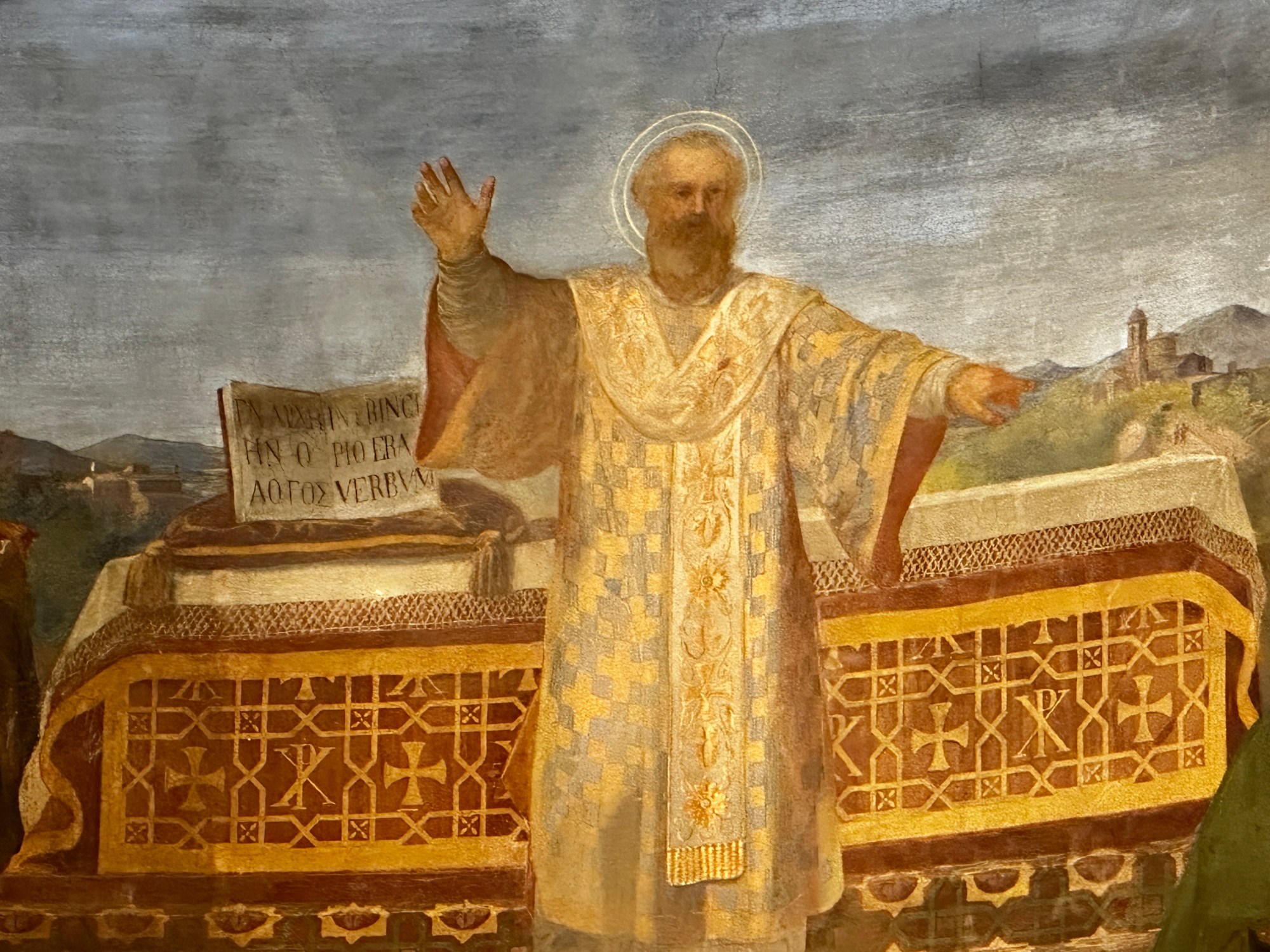
The Lenten Station
On the Saturday of the Fourth Week of Lent, the Roman stational tradition gathers the faithful at San Nicola in Carcere, located near the Forum Boarium, between the Capitoline Hill and the Tiber. The church stands in an area that was once part of the Forum Holitorium, the ancient vegetable market of Rome.
This station places the Lenten pilgrimage within a site where the remains of pagan Rome are visibly incorporated into a Christian basilica.
Video Tour of San Nicola in Carcere
Built upon the Temples of Rome
San Nicola in Carcere is constructed directly over the remains of three Roman temples dating from the 2nd and 3rd centuries BC, traditionally identified as those dedicated to Janus, Juno Sospita, and Spes (Hope).
These temples once stood side by side in the Forum Holitorium. When the Christian church was built, their structures were not removed but incorporated into the fabric of the basilica. Columns from the ancient temples are still visible in the walls and façade, and parts of the original podium survive in the crypt beneath the church.
The result is one of the clearest architectural examples in Rome of the transformation of pagan sacred space into Christian worship.
Origins of the Church
The earliest Christian presence on the site likely dates to the 6th century, when a church was first established among the ruins of the ancient forum.
The first documented reconstruction and consecration occurred in 1128, as recorded by an inscription still visible in the church.
The church was dedicated to Saint Nicholas of Myra, reflecting the influence of the Greek community living in this part of Rome, who had a particular devotion to the saint.
The name “in Carcere” (“in prison”) refers to a medieval tradition that the ancient temple structures had been used as a prison, although this identification is not historically exact.
Medieval and Renaissance Development
During the Middle Ages, the church became a titular diaconia, established around the 8th century to assist the poor and prisoners of the city.
The present appearance of the basilica is largely the result of a major reconstruction in 1599 carried out by the architect Giacomo della Porta, who designed the current façade while preserving the ancient structural elements.
Later restorations in the 19th century under Pope Pius IX further stabilized and decorated the church, while work in the 20th century removed surrounding buildings to reveal more clearly the remains of the ancient temples embedded in the structure.
Interior and Architectural Features
The interior follows a three-nave basilican plan, with the nave divided by rows of columns taken directly from the ancient temples. These columns vary in material and size, reflecting their origin as spolia from different classical structures.
Beneath the high altar is an ancient basin containing relics of martyrs, continuing the early Christian practice of associating the Eucharistic altar with the witness of the saints.
Access to the crypt reveals the foundations of the Roman temples, allowing a direct view of the architectural layers that underlie the church.
The Station Significance
As the station church for this day of Lent, San Nicola in Carcere presents a striking image of continuity and transformation. The Church gathers for the Eucharist within walls that were once part of pagan temples and later associated with imprisonment.
In the Lenten pilgrimage, this setting emphasizes the passage from the old order to the new: from the religious life of ancient Rome to the worship of Christ, from structures associated with confinement to a place of redemption and prayer.
Here, the faithful stand within the visible remains of Rome’s past, now ordered toward the liturgy of the Church — a reminder that the Christian faith did not erase the city’s history, but transformed it.
Receive these articles daily in your inbox by subscribing here:
And please share this article with your family and friends — every share helps our fellow Catholic brothers and sisters discover Rome’s most ancient treasures, and hopefully brings edification through the liturgical season of Lent.
The full Lenten itinerary can be found here at the sticky post with links to every video tour of the Roman Station Churches available at Crux Stationalis.
I propose two works for your Lenten meditations and beyond Lent to concentrate your prayer on the Passion of Christ and his Love for you in His Passion: 31 Days of Meditations on the Passion written by a Passionist Father and Flowers of the Passion by St. Paul of the Cross.
 Crux Stationalis